The Innovators Behind the AquaHacking Binational
Discover the teams competing in the AquaHacking Binational Challenge, turning their ideas into concrete solutions to today's most pressing freshwater issues.

 Water Quality & Ecosystem Health
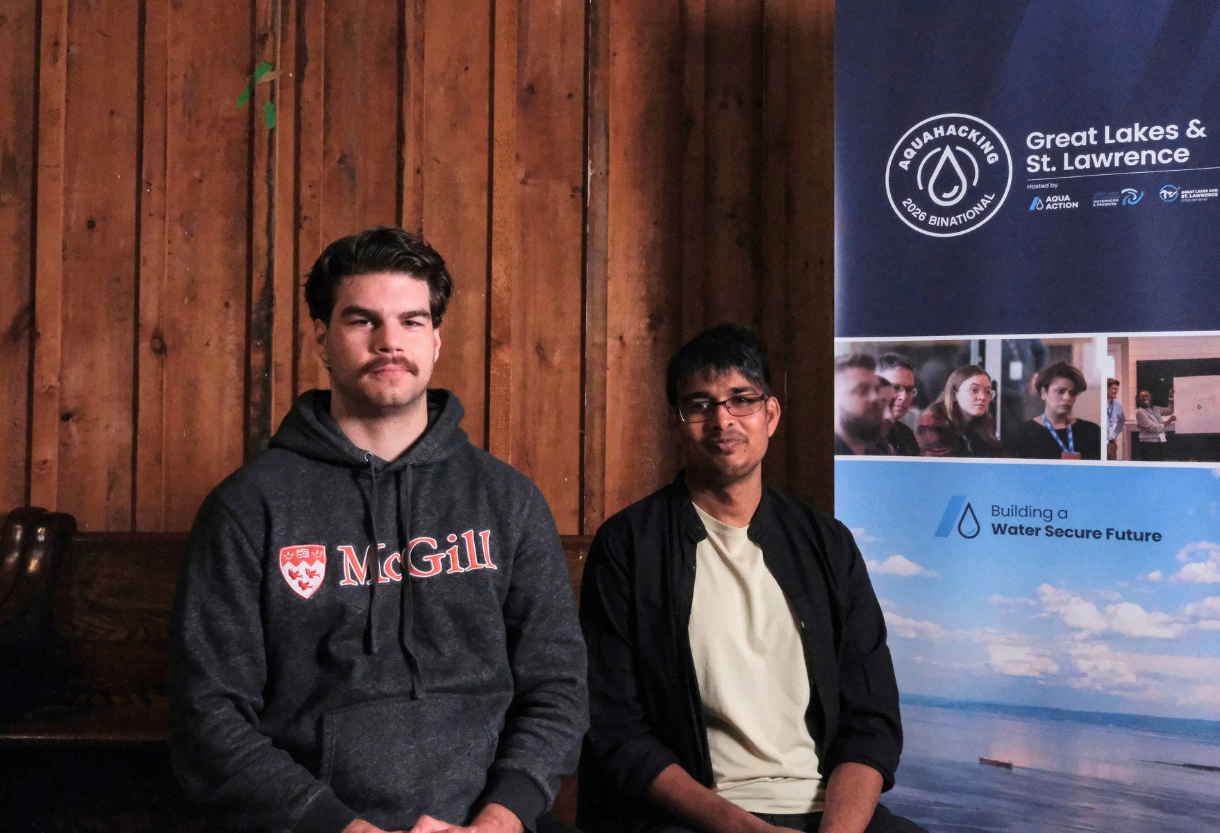
TEAM MEMBERS
Alessio Fortin, Devendra Pal, Zi Wang
ACADEMIC INSTITUTION
 McGill University
FUN FACT
 This team has been to 28 different countries.
PROJECT DESCRIPTION
AquaHQL delivers continuous, in-situ monitoring of nanoscale emerging contaminants, including nanoplastics and nanometals, that current monitoring systems cannot detect. The platform provides particle-level intelligence to track contaminant dispersal toward drinking water intakes in real time.
 Great Lakes Circular Blue Economy
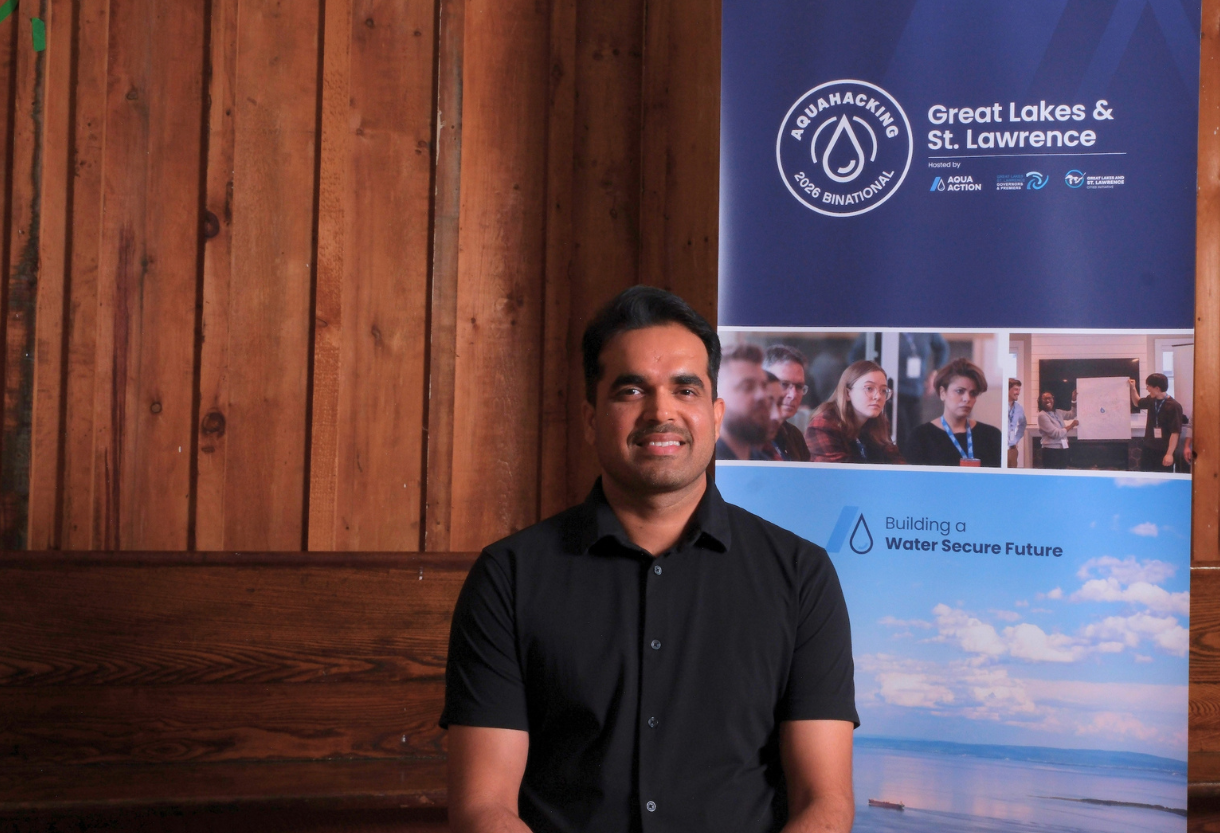
TEAM MEMBERS
Abhishek Udawat
ACADEMIC INSTITUTION
Massachusetts Institute of Technology
FUN FACT
This team member loves canoeing and just had a daughter, whom they want to preserve the Great Lakes for.
PROJECT DESCRIPTION
BlueLoop BioWorks converts fish-processing byproducts from the Great Lakes, including skins, scales, frames, and viscera, into high-value biomaterials and bioactive ingredients through modular, enzyme-based bioprocessing. Rather than treating these byproducts as waste, the system produces collagen and gelatin hydrogel inputs, peptide fertilizers, and omega-rich oil fractions for local markets, supporting cleaner fisheries and a circular regional bioeconomy.
 Water Quality & Ecosystem Health
TEAM MEMBERS
Sabrine Sayadi
ACADEMIC INSTITUTION
UQAM | Université du Québec à Montréal
PROJECT DESCRIPTION
CelluPure is developing a modular, cellulose-based filtration technology that uses advanced functionalized fibres to remove multiple contaminants in a single treatment step, helping industries meet regulatory requirements while reducing treatment complexity, sludge generation, and operational costs.
 Water Quality & Ecosystem Health
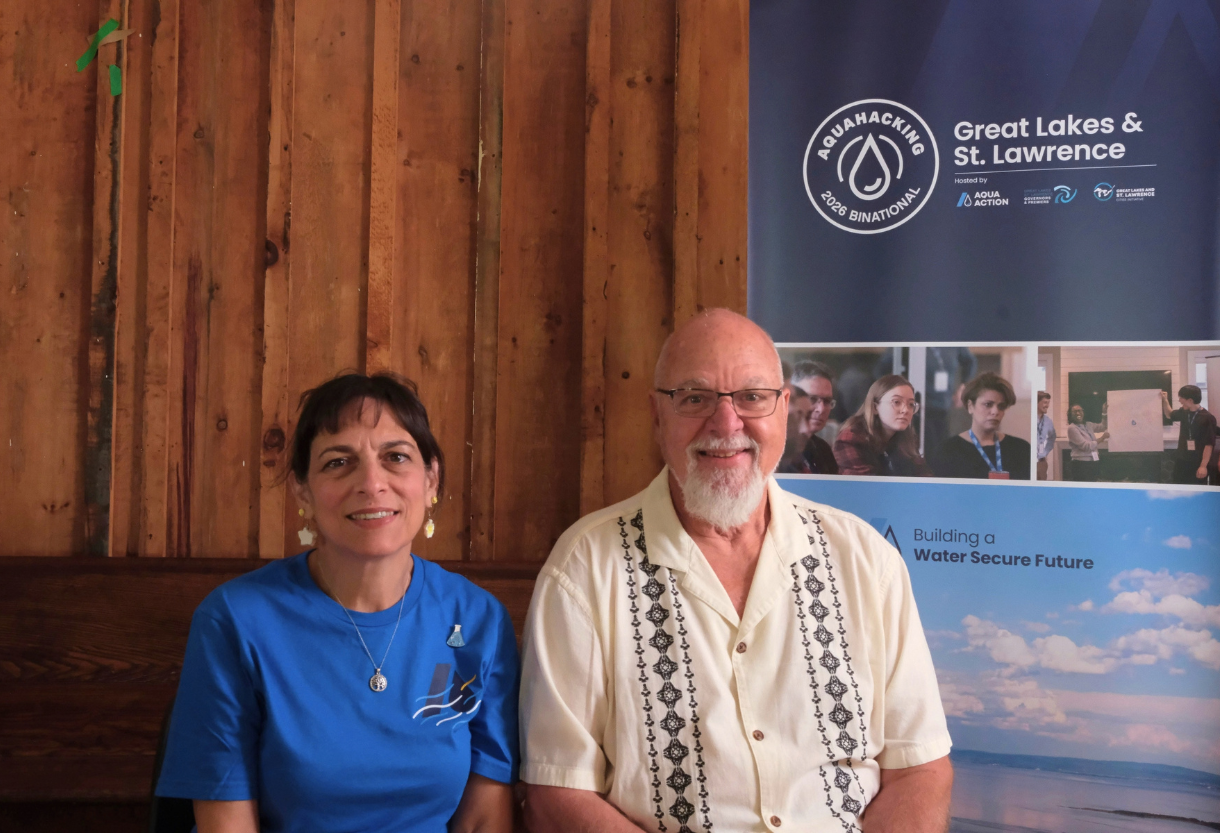
TEAM MEMBERS
Marc Chason, Dan Gamota, Prof. Marcia Silva, Prof. Christos Takoudis, Prof. Gregory Jursich, Rick Latella
FUN FACT
Their university–industry partnership is so lively that half of their meetings turn into accidental stunt shows.
PROJECT DESCRIPTION
DMRI-UIC AquaTech Ventures has developed PurAsure™, a NOVEX-AMG®-powered passive in-line water remediation platform that continuously reduces pathogens and disrupts biofilm formation as water flows through existing infrastructure. Designed for stormwater, municipal, agricultural, aquaculture, and cooling-water applications, it offers a scalable retrofit that requires no electricity, chemical dosing, or complex operation, and has demonstrated greater than 6-log (99.9999%) pathogen reduction through laboratory and university validation.
 Great Lakes Circular Blue Economy
TEAM MEMBERS
Andrew Booth, Kent Walter, Trevor Kloppenburg
ACADEMIC INSTITUTION
University of Windsor
PROJECT DESCRIPTION
100% Fish transforms fish-processing waste, supplied by partner John O's Foods, into value-added products such as Erie Eco-Bites and a collagen cream. The team's mission is to reduce landfill waste by scaling eco-friendly manufacturing as an alternative to everyday products.
Water Quality & Ecosystem Health
TEAM MEMBERS
Haolun (Allen) Tian, Luke Schmidt
ACADEMIC INSTITUTIONQueen's University
FUN FACT
This team is named after both the cute monotreme from Australia and the mother of monsters from Greek mythology!
PROJECT DESCRIPTION
EchiDNA Environmental has created a high-volume, pumpless, reusable, room-temperature-stable eDNA filter that makes environmental DNA (eDNA) biomonitoring accessible beyond academic settings, enabling anyone to collect samples at low start-up cost.
 Water Quality & Ecosystem Health
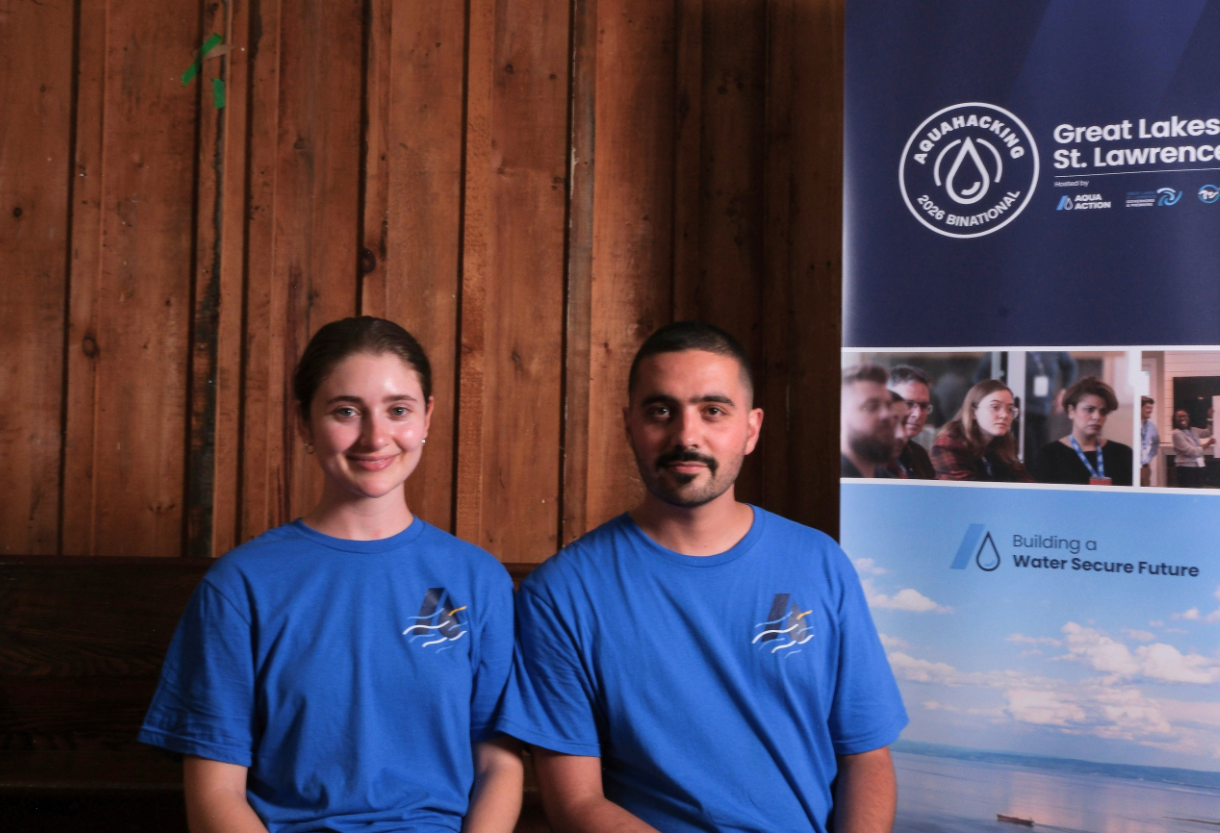
TEAM MEMBERS
Nicolas Betancur
ACADEMIC INSTITUTIONUniversity of Michigan
FUN FACT
For this team, this whole project has been an example of how building with AI empowers the engineer to expand beyond their specialty to make an interdisciplinary impact.
PROJECT DESCRIPTION
Lake Monitor is a harmful algal bloom (HAB) monitoring program that uses field robotics, autonomy, and limnological methods to generate high-density bloom maps supporting operator decision-making and research, including in shallow-water HAB risk zones that monitoring boats cannot reach.
 Water Quality & Ecosystem Health
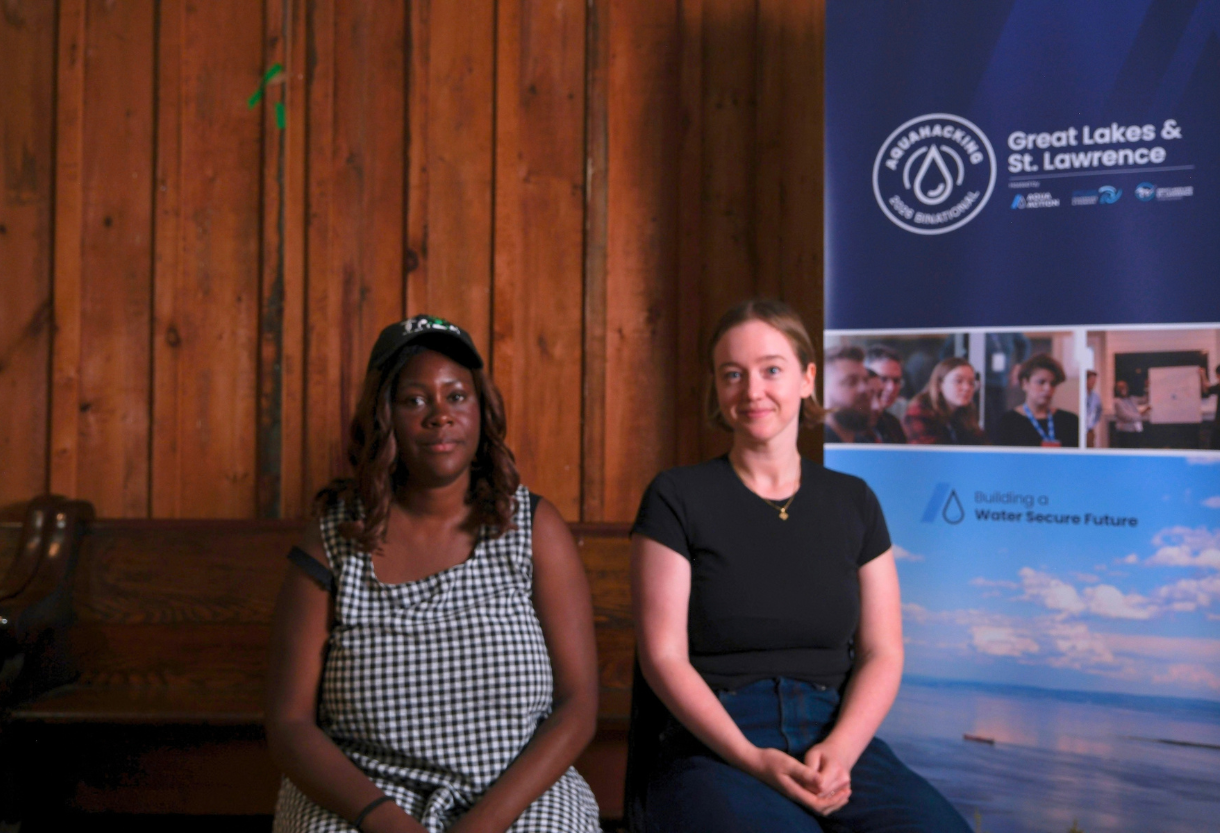
TEAM MEMBERS
Jessica Reemeyer, Aaliyah Lahai, Ashleigh Addison
ACADEMIC INSTITUTIONUniversity of Regina
FUN FACT
This is an all-woman team!
PROJECT DESCRIPTION
Limnetic Optical Solutions has built an AI-powered underwater camera that makes freshwater monitoring simple, affordable, and non-invasive. The camera automatically detects fish and records only when wildlife is present, helping researchers and communities collect meaningful data while using less storage and power.
 Great Lakes Circular Blue Economy
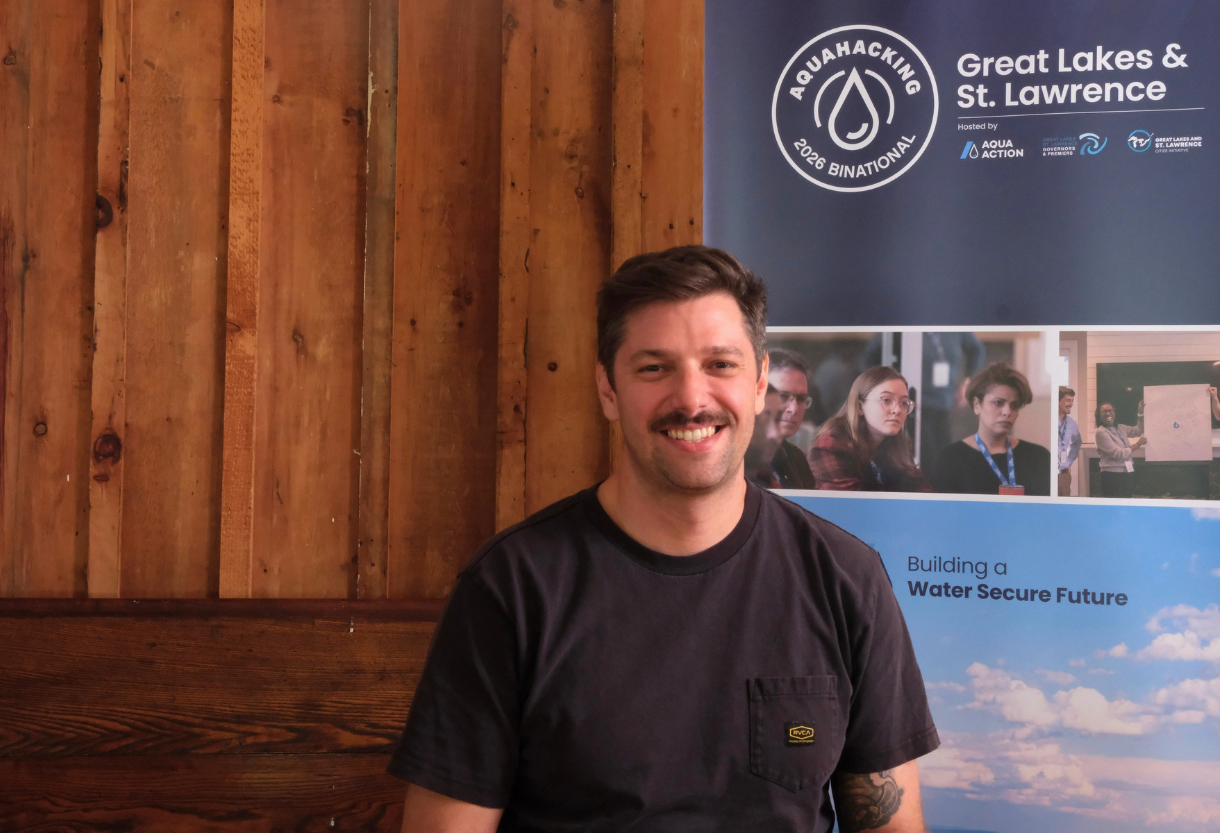
TEAM MEMBERS
François Xavier Rioux, Jean-Christophe Gauthier Marquis, Louis-André Gagnon
ACADEMIC INSTITUTION
Université du Québec à Trois-Rivières
FUN FACT
During the semi-finals, this team will be spread across three different time zones.
PROJECT DESCRIPTION
OriginEAUX proposes a non-profit regional biorefinery in Wheatley, Ontario, to valorize freshwater fishery byproducts. Using hydrothermal liquefaction and gelatin extraction, the hub would transform currently underused biomass into renewable diesel, naphtha, gelatin, and other locally useful byproducts. By connecting fish processors, fishers, agriculture, greenhouses, and regional markets, their project creates a circular model with both environmental and economic benefits.
 Water Quality & Ecosystem Health
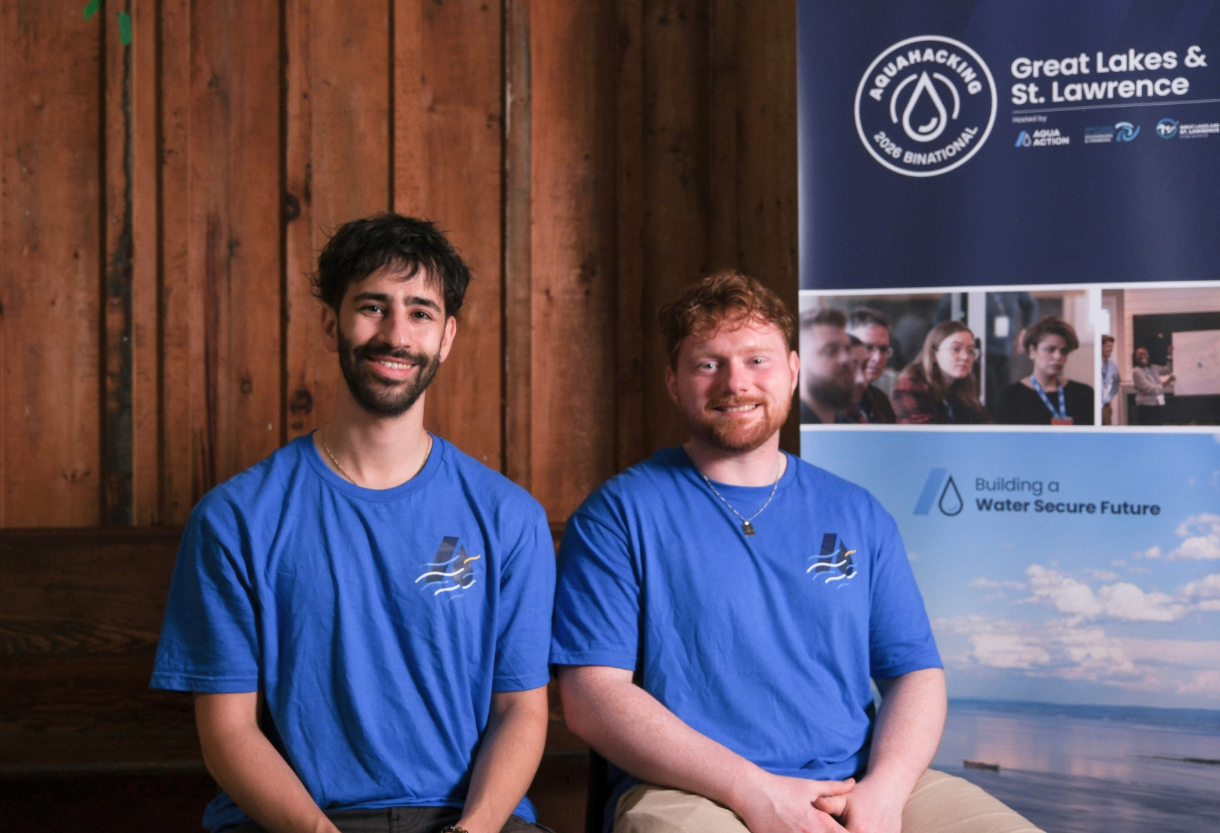
TEAM MEMBERS
Matis Garbez, Rin Baudelet, Karim Bouzid
ACADEMIC INSTITUTIONUniversity Laval
FUN FACT
The idea for this project was born 16 years ago, back in 2010, when one of their team members first dreamed it up in high school!
PROJECT DESCRIPTION
This team has developed a portable, affordable device that autonomously identifies and monitors aquatic microparticles directly in the field, tracking algae and microplastics between 5 and 500 micrometers. The device alerts users to emerging risks such as harmful algal blooms, eutrophication, biodiversity loss, and invasive species, enabling early intervention that protects ecosystem health and reduces costs for local communities.
 Water Quality & Ecosystem Health
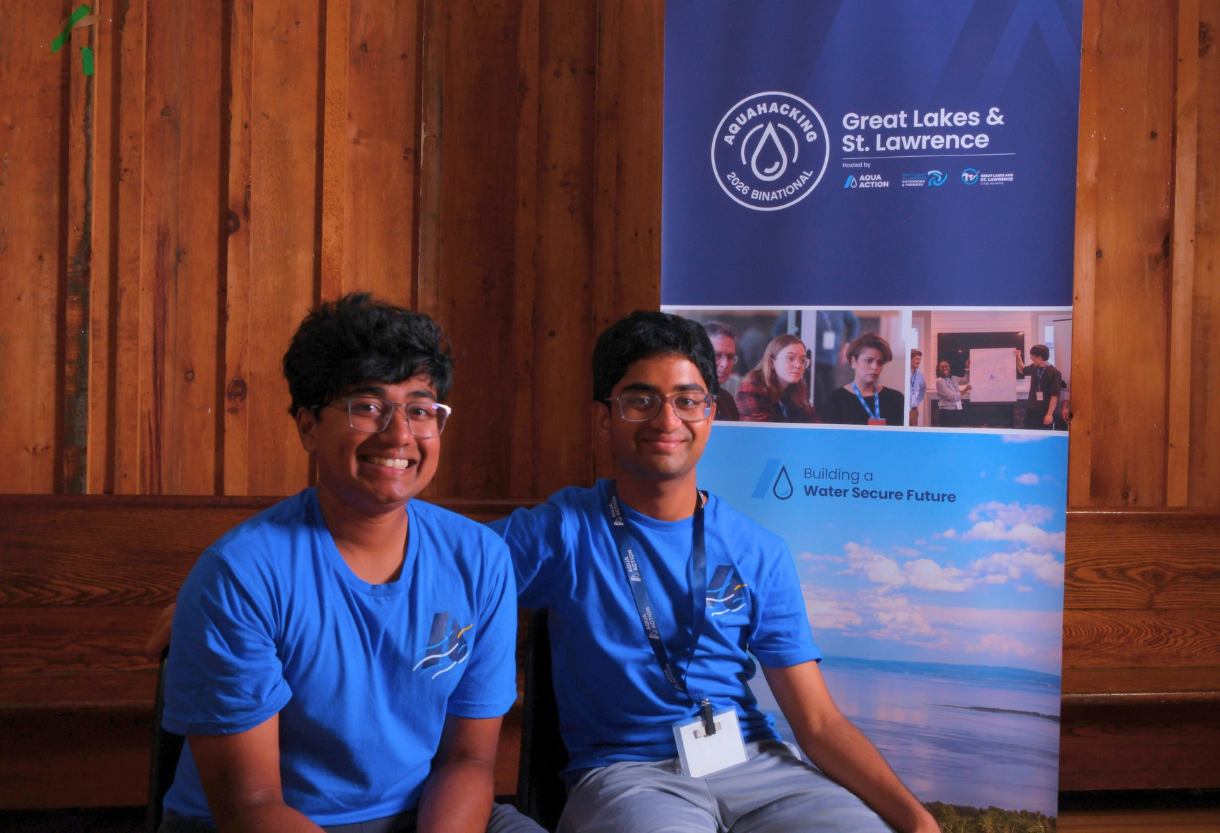
TEAM MEMBERS
Hemanshu Viswanathan, Aditya Ambarisha, Raghavendra Suswaram
ACADEMIC INSTITUTIONNovi High School
FUN FACT
This team was featured on the local news (WDIV) alongside Brittany VanderBeek in an interview advertising the AquaHacking Challenge! The segment got thousands of views. Watch it here!
PROJECT DESCRIPTION
WaterSentinel is a modular buoy that removes microplastics and other small particles from local freshwater systems through a four-step process: intake, electrocoagulation, cyclone filtration, and excretion.
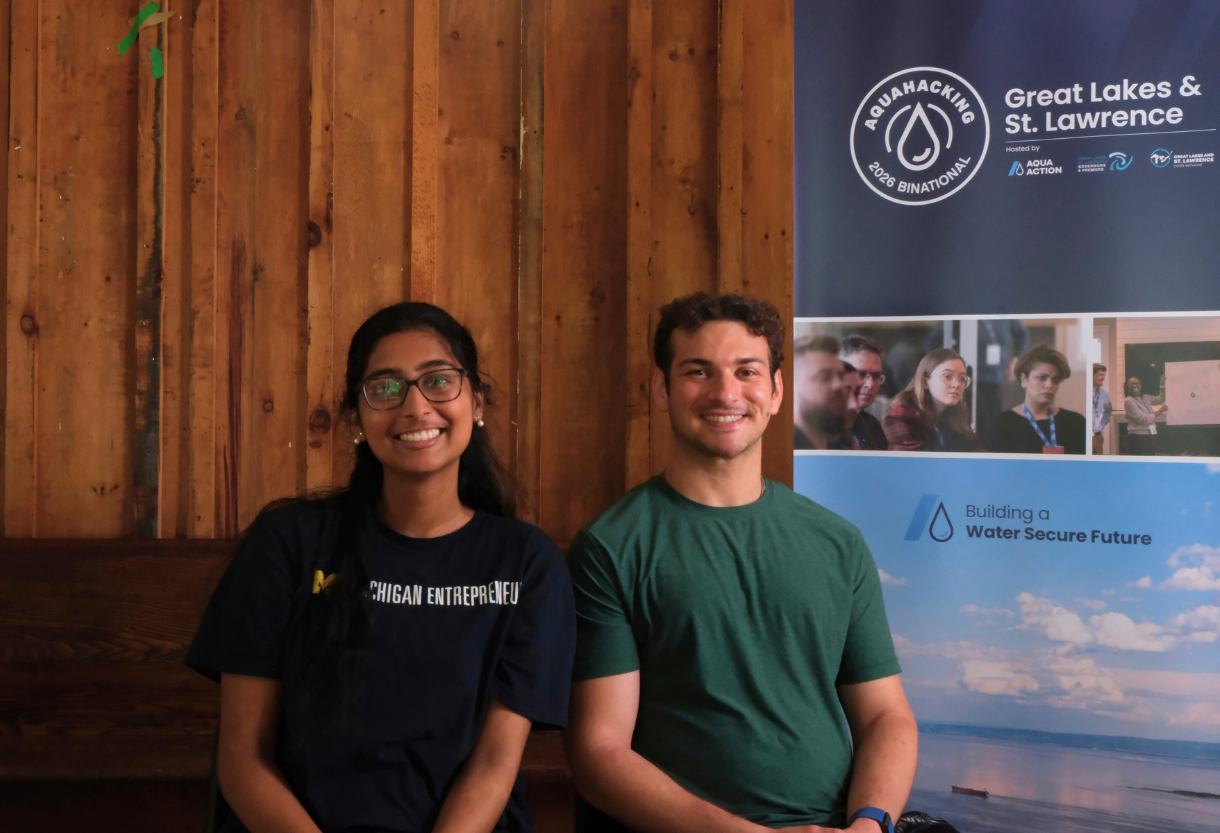 Efficient Industry & Energy
TEAM MEMBERS
Ivana Vera Sanchez, Sruthi Pereddy, Michael Ettlinger
ACADEMIC INSTITUTION
University of Michigan
PROJECT DESCRIPTION
WELs has developed ThermaMound, a data center cooling system that applies physics concepts such as Archimedes' principle and buoyancy to eliminate the need for mechanical chillers and pumps. Working at the water-energy nexus, the design significantly reduces electricity consumption while conserving local freshwater.
TEAM MEMBERS
Andrew Booth, Kent Walter, Trevor Kloppenburg
ACADEMIC INSTITUTION
University of Windsor
PROJECT DESCRIPTION
100% Fish transforms fish-processing waste, supplied by partner John O's Foods, into value-added products such as Erie Eco-Bites and a collagen cream. The team's mission is to reduce landfill waste by scaling eco-friendly manufacturing as an alternative to everyday products.
TEAM MEMBERS
Abhishek Udawat
ACADEMIC INSTITUTION
Massachusetts Institute of Technology
FUN FACT
This team member loves canoeing and just had a daughter, whom they want to preserve the Great Lakes for.
PROJECT DESCRIPTION
BlueLoop BioWorks converts fish-processing byproducts from the Great Lakes, including skins, scales, frames, and viscera, into high-value biomaterials and bioactive ingredients through modular, enzyme-based bioprocessing. Rather than treating these byproducts as waste, the system produces collagen and gelatin hydrogel inputs, peptide fertilizers, and omega-rich oil fractions for local markets, supporting cleaner fisheries and a circular regional bioeconomy.
Finalist
TEAM MEMBERS
François Xavier Rioux, Jean-Christophe Gauthier Marquis, Louis-André Gagnon
ACADEMIC INSTITUTION
Université du Québec à Trois-Rivières
FUN FACT
During the semi-finals, this team will be spread across three different time zones.
PROJECT DESCRIPTION
OriginEAUX proposes a non-profit regional biorefinery in Wheatley, Ontario, to valorize freshwater fishery byproducts. Using hydrothermal liquefaction and gelatin extraction, the hub would transform currently underused biomass into renewable diesel, naphtha, gelatin, and other locally useful byproducts. By connecting fish processors, fishers, agriculture, greenhouses, and regional markets, their project creates a circular model with both environmental and economic benefits.
TEAM MEMBERS
Ivana Vera Sanchez, Sruthi Pereddy, Michael Ettlinger
ACADEMIC INSTITUTION
University of Michigan
PROJECT DESCRIPTION
WELs has developed ThermaMound, a data center cooling system that applies physics concepts such as Archimedes' principle and buoyancy to eliminate the need for mechanical chillers and pumps. Working at the water-energy nexus, the design significantly reduces electricity consumption while conserving local freshwater.
TEAM MEMBERS
Alessio Fortin, Devendra Pal, Zi Wang
ACADEMIC INSTITUTION
McGill University
FUN FACT
This team has been to 28 different countries.
PROJECT DESCRIPTION
AquaHQL delivers continuous, in-situ monitoring of nanoscale emerging contaminants, including nanoplastics and nanometals, that current monitoring systems cannot detect. The platform provides particle-level intelligence to track contaminant dispersal toward drinking water intakes in real time.
TEAM MEMBERS
Sabrine Sayadi
ACADEMIC INSTITUTION
UQAM | Université du Québec à Montréal
PROJECT DESCRIPTION
CelluPure is developing a modular, cellulose-based filtration technology that uses advanced functionalized fibres to remove multiple contaminants in a single treatment step, helping industries meet regulatory requirements while reducing treatment complexity, sludge generation, and operational costs.
TEAM MEMBERS
Marc Chason, Dan Gamota, Prof. Marcia Silva, Prof. Christos Takoudis, Prof. Gregory Jursich, Rick Latella
FUN FACT
Their university–industry partnership is so lively that half of their meetings turn into accidental stunt shows.
PROJECT DESCRIPTION
DMRI-UIC AquaTech Ventures has developed PurAsure™, a NOVEX-AMG®-powered passive in-line water remediation platform that continuously reduces pathogens and disrupts biofilm formation as water flows through existing infrastructure. Designed for stormwater, municipal, agricultural, aquaculture, and cooling-water applications, it offers a scalable retrofit that requires no electricity, chemical dosing, or complex operation, and has demonstrated greater than 6-log (99.9999%) pathogen reduction through laboratory and university validation.
TEAM MEMBERS
Haolun (Allen) Tian, Luke Schmidt
ACADEMIC INSTITUTIONQueen's University
FUN FACT
This team is named after both the cute monotreme from Australia and the mother of monsters from Greek mythology!
PROJECT DESCRIPTION
EchiDNA Environmental has created a high-volume, pumpless, reusable, room-temperature-stable eDNA filter that makes environmental DNA (eDNA) biomonitoring accessible beyond academic settings, enabling anyone to collect samples at low start-up cost.
TEAM MEMBERS
Nicolas Betancur
ACADEMIC INSTITUTIONUniversity of Michigan
FUN FACT
For this team, this whole project has been an example of how building with AI empowers the engineer to expand beyond their specialty to make an interdisciplinary impact.
PROJECT DESCRIPTION
Lake Monitor is a harmful algal bloom (HAB) monitoring program that uses field robotics, autonomy, and limnological methods to generate high-density bloom maps supporting operator decision-making and research, including in shallow-water HAB risk zones that monitoring boats cannot reach.
TEAM MEMBERS
Jessica Reemeyer, Aaliyah Lahai, Ashleigh Addison
ACADEMIC INSTITUTIONUniversity of Regina
FUN FACT
This is an all-woman team!
PROJECT DESCRIPTION
Limnetic Optical Solutions has built an AI-powered underwater camera that makes freshwater monitoring simple, affordable, and non-invasive. The camera automatically detects fish and records only when wildlife is present, helping researchers and communities collect meaningful data while using less storage and power.
TEAM MEMBERS
Matis Garbez, Rin Baudelet, Karim Bouzid
ACADEMIC INSTITUTIONUniversity Laval
FUN FACT
The idea for this project was born 16 years ago, back in 2010, when one of their team members first dreamed it up in high school!
PROJECT DESCRIPTION
This team has developed a portable, affordable device that autonomously identifies and monitors aquatic microparticles directly in the field, tracking algae and microplastics between 5 and 500 micrometers. The device alerts users to emerging risks such as harmful algal blooms, eutrophication, biodiversity loss, and invasive species, enabling early intervention that protects ecosystem health and reduces costs for local communities.
TEAM MEMBERS
Hemanshu Viswanathan, Aditya Ambarisha, Raghavendra Suswaram
ACADEMIC INSTITUTIONNovi High School
FUN FACT
This team was featured on the local news (WDIV) alongside Brittany VanderBeek in an interview advertising the AquaHacking Challenge! The segment got thousands of views. Watch it here!
PROJECT DESCRIPTION
WaterSentinel is a modular buoy that removes microplastics and other small particles from local freshwater systems through a four-step process: intake, electrocoagulation, cyclone filtration, and excretion.